
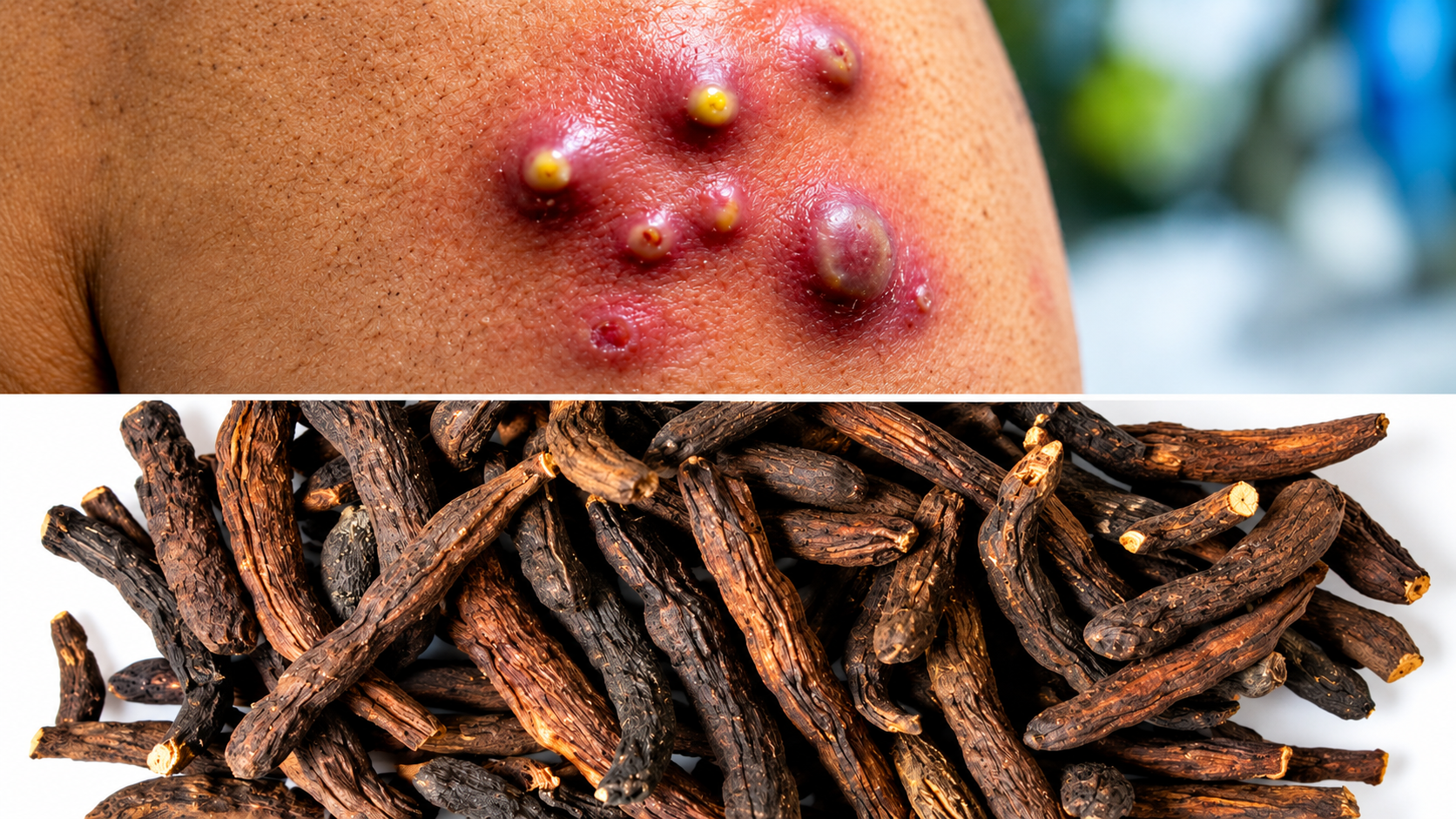
Explore the traditional use of Negro Pepper (Xylopia aethiopica) for boils and swellings through the lens of modern scie...
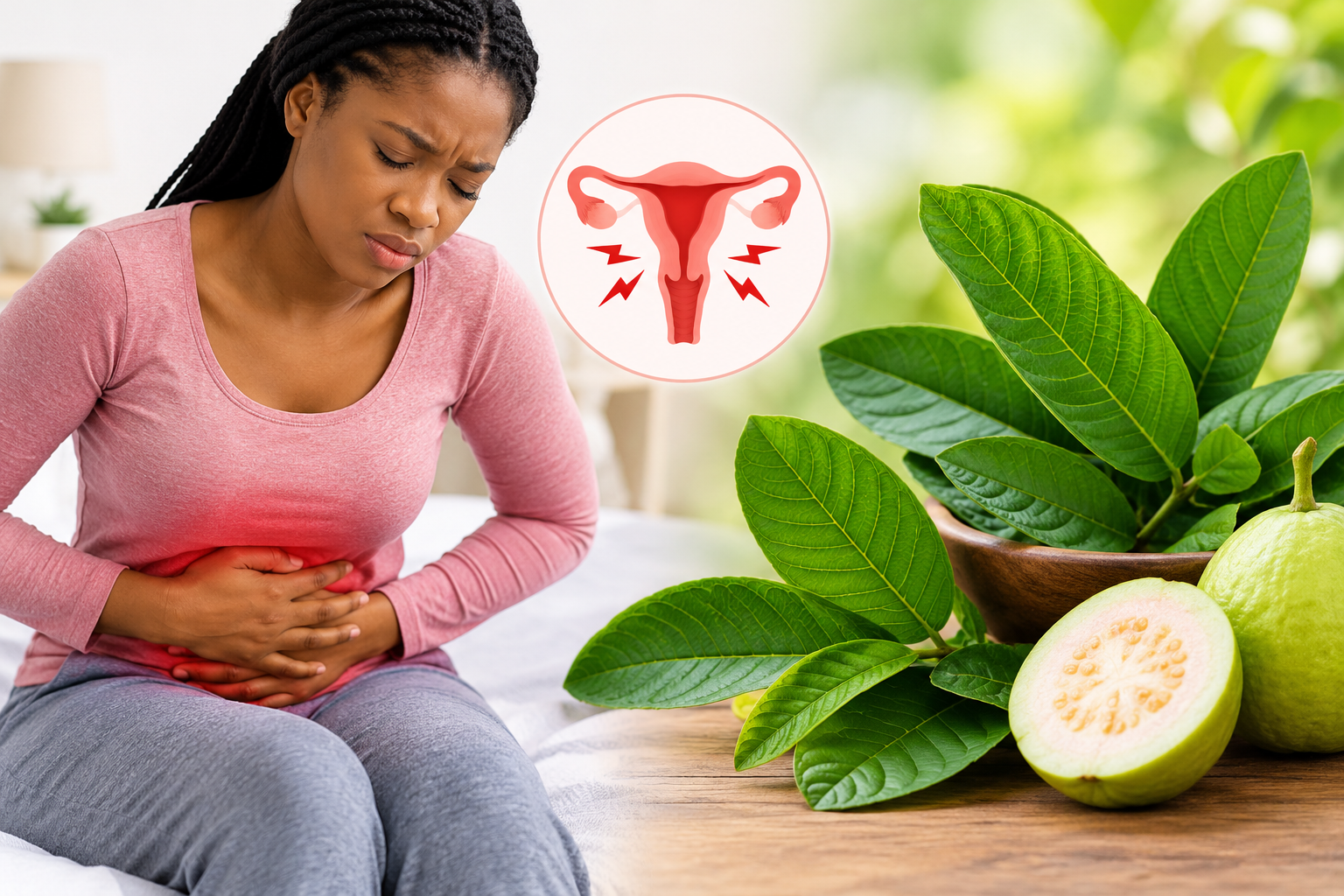
Guava Leaves (Psidium guajava) for Menstrual Cramps: Scientific Evidence Behind a Traditional Herbal Remedy
Guava leaves (Psidium guajava) are more than a traditional household remedy. Importantly, there is published human clinical research specifically investigating Psidium guajava leaf extract for primary dysmenorrhea (menstrual cramps).
A randomized clinical trial published in the Journal of Ethnopharmacology in 2007 studied 197 women with primary dysmenorrhea. The researchers reported a significant reduction in menstrual pain among participants receiving 6 mg daily of a standardized guava-leaf extract. This provides direct scientific support for investigating guava leaves as a potential herbal approach to menstrual pain management.
Menstrual cramps, medically known as dysmenorrhea, are commonly experienced by women during menstruation. They occur when the uterus contracts to shed its lining. These contractions are influenced by substances called prostaglandins, which can cause painful uterine contractions, reduced blood flow, and inflammation.
This is where guava leaves become particularly interesting from a herbal medicine perspective.
Guava leaves contain several biologically active compounds, including quercetin, catechin, gallic acid, chlorogenic acid, kaempferol and other flavonoids. These phytochemicals have demonstrated antioxidant and anti-inflammatory activities in scientific investigations. Some research also identifies pharmacological activities relevant to pain and smooth-muscle relaxation.
These properties provide a reasonable scientific explanation for why guava leaves have attracted attention in the management of menstrual discomfort.
One particularly important study is Doubova and colleagues' 2007 randomized clinical trial, titled Effect of a Psidii guajavae folium extract in the treatment of primary dysmenorrhea.
The researchers investigated 197 women experiencing primary dysmenorrhea. Participants received different doses of standardized guava-leaf extract, ibuprofen or placebo.
The findings showed that the group receiving 6 mg daily of the standardized guava-leaf extract experienced a statistically significant reduction in menstrual pain. The lower 3 mg dose did not demonstrate the same consistent effect throughout the treatment period.
This is particularly significant because it moves the discussion beyond traditional observations and provides direct human clinical evidence supporting the potential of guava leaves in menstrual pain management.
However, it is important to distinguish the standardized extract investigated in this trial from the traditional homemade water preparation described below. The clinical trial does not establish that both preparations have identical effects or equivalent dosages.
In traditional herbal practice, guava leaves are prepared as a water decoction to extract their naturally occurring plant constituents.
Ingredients
5-7 Fresh guava leaves (Psidium guajava).
500 mL of water.
Preparation
Wash the guava leaves thoroughly.
Boil in 500 mL of water for 10–15 minutes.
Strain and allow to cool.
Dosage
Take one cup in the morning before meals, once daily.
Duration
Begin five days before the expected menstrual cycle and continue for the first three days of menstruation.
Boiling in water is a traditional extraction method that allows certain water-soluble phytochemicals to pass into the preparation. However, the quantity of leaves and concentration of the resulting decoction can influence its composition.
Although the clinical findings are encouraging, the precise safety and effectiveness of this particular homemade preparation and dosage have not been established through equivalent clinical trials.
Women who are pregnant, breastfeeding, taking regular medication or managing underlying health conditions should seek professional advice before using medicinal guava-leaf preparations.
Persistent, unusually severe or worsening menstrual pain should also receive professional evaluation because conditions such as endometriosis and uterine fibroids can cause secondary dysmenorrhea.
From a traditional herbal medicine perspective, guava leaves deserve serious consideration in the management of menstrual discomfort. Their rich phytochemical composition, documented pharmacological activities, and, particularly, the existence of a randomized human clinical trial provide a meaningful scientific foundation for their traditional application.
The 2007 clinical findings are especially encouraging because they demonstrate that a standardized guava-leaf extract can significantly reduce primary menstrual pain under the conditions studied.
Guava (Psidium guajava) therefore represents a promising medicinal plant worthy of further clinical investigation in women's reproductive wellness.
1. Doubova SV, et al. (2007). Effect of a Psidii guajavae folium extract in the treatment of primary dysmenorrhea: A randomized clinical trial. Journal of Ethnopharmacology.
2. Kumar M, et al. (2021). Guava (Psidium guajava L.) Leaves: Nutritional Composition, Phytochemical Profile, and Health-Promoting Bioactivities. Foods.
3. Huynh HD, et al. (2025). Bioactive Compounds from Guava Leaves (Psidium guajava L.): Characterization, Biological Activity, Synergistic Effects, and Technological Applications. Molecules.
4. Ferries-Rowe E, Corey E, Archer JS. (2020). Primary Dysmenorrhea: Diagnosis and Therapy. Obstetrics & Gynecology.
ABOUT THE AUTHOR

Francis Owusu-Banahene is an herbal practitioner, health educator, and wellness writer who promotes better health through simple, natural lifestyle choices such as food, herbs, and everyday habits. He combines African traditional healing knowledge with modern nutrition and health science to make wellness practical and accessible. As CEO of East Eden Health Reform Center, he advocates for natural health education, herbal medicine, and holistic living to support long-term, sustainable well-being.
Explore the traditional use of Negro Pepper (Xylopia aethiopica) for boils and swellings through the lens of modern scie...
Do cut onions really attract bacteria from the air? Discover the truth behind this popular food safety myth, how cut oni...

The clove tree (Syzygium aromaticum) is a medicinal plant rich in eugenol, traditionally used for mouth, nose, and throa...

Sunflower seeds may look small, but they are packed with powerful nutrients your body needs every day. In this article,...